Entertainment
Caricatronchi: The Bold Digital Art Style Redefining Identity

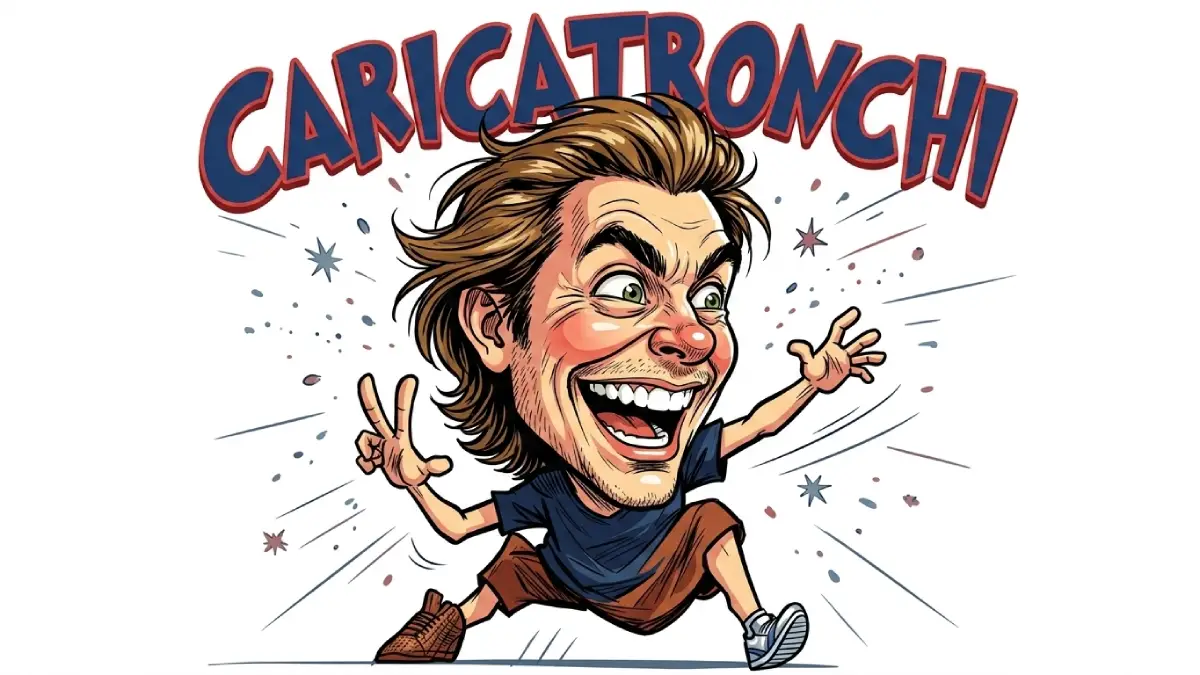
There are some art movements that arrive quietly, find their footing in niche communities, and then suddenly seem to be everywhere at once. Caricatronchi is exactly that kind of movement. It has been building momentum across online creative circles since the early 2020s, and by 2025 it has become one of the most talked-about visual styles in digital art, personal branding, and cultural commentary. If you have ever come across an illustration that stopped you mid-scroll — one that was simultaneously funny, unsettling, deeply expressive, and somehow more honest than a photograph — there is a good chance you were looking at something that belongs to this tradition. Understanding what caricatronchi actually is, where it comes from, and why it resonates so powerfully with modern audiences tells us something important not just about art, but about the strange, fragmented ways we see ourselves in a digital world.
What Exactly Is Caricatronchi?
At its most basic level, caricatronchi is a contemporary art concept that builds on the centuries-old tradition of caricature while pushing it into genuinely new territory. The word itself is a portmanteau rooted in Italian. The first half draws from caricatura, meaning an exaggerated or loaded artistic representation, typically used to highlight character through distortion. The second half, tronchi, is Italian for trunks, torsos, or fragmented body forms. Put these together and you get something that loosely means exaggerated torsos or distorted body structures — a term that points toward an art style where the whole human figure, not just the face, becomes a canvas for expressive manipulation.
What separates caricatronchi from its predecessor, the traditional caricature, is scope and intention. A classic caricature, whether you think of the sharp political cartoons in 19th-century newspapers or the portraits done at seaside fairs, tends to focus on facial features. The enormous nose, the beady eyes, the exaggerated jawline — these are the tools of the traditional caricaturist’s trade. Caricatronchi expands that vocabulary significantly. The body itself is subject to distortion, proportion play, and symbolic manipulation. A character might have a massive torso tapering to impossibly thin legs, or arms rendered as geometric shapes, or a head fragmented and reassembled in ways that suggest psychological complexity rather than simply visual humor. The exaggeration is not purely for laughs, though it often is funny. It is also a form of emotional and conceptual communication.
This grassroots origin is actually part of what gives it vitality — the style is genuinely democratic, accessible to anyone with a drawing tablet and an internet connection, and it continues to evolve as more artists bring their own sensibilities to it.
Will You Check This Article: FiberNL: The Independent Fiber Provider Reshaping Dutch Internet
The Roots: A Long History of Expressive Distortion
To understand why caricatronchi feels so alive right now, it helps to understand the deep historical tradition it is drawing from. The impulse to exaggerate the human form for artistic effect is not new at all. Michelangelo similarly played with proportion and form in ways that were deliberately anti-naturalistic.
By the 17th and 18th centuries, caricature had become a genuine political weapon. In England, artists like James Gillray used savagely exaggerated portraits of royalty and politicians to skewer power in ways that journalism could not. In France, Honoré Daumier created hundreds of lithographs that turned public figures into almost grotesque archetypes, each one a visual argument about vanity, corruption, or absurdity. These were not just funny pictures — they were acts of cultural resistance, and the exaggeration was doing serious work. The tradition spread to Italy, where it found particular fertile ground in a culture that had always valued both aesthetic pleasure and sharp wit.
Artists like Pablo Picasso and Salvador Dalí demonstrated that breaking the human form apart and reassembling it according to emotional or psychological logic rather than anatomical logic could produce images of extraordinary power. These movements gave later artists a much larger permission structure — if Picasso could fragment a face across multiple planes simultaneously, then the idea of distorting a torso for expressive purposes carries a respectable pedigree indeed.
Caricatronchi sits at the intersection of all these traditions. It inherits the satirical edge of political caricature, the emotional ambition of expressionism, and the freedom of surrealism, while wearing the clothes of 21st-century digital aesthetics. That combination is unusual and, in many ways, quite potent.
The Visual Language of Caricatronchi
Part of what makes caricatronchi recognizable as a style is that it has developed a fairly consistent set of visual characteristics, even though no single authority has dictated what those should be.
Exaggerated Proportions and the Body as Subject
The most immediately obvious quality is the deliberate distortion of proportions, and crucially, this distortion extends well below the neck. There is a strong emphasis on expressing psychological states through posture and body language rather than relying solely on facial expression. A character hunched under an enormous weight of their own head communicates something different from one whose torso puffs up with exaggerated confidence. This use of the full body as an expressive instrument is genuinely distinctive.
Bold Linework and Vibrant Color
Caricatronchi art tends to use clean, confident linework rather than the soft gradients of hyper-realistic digital painting. The lines are intentional and often bold, which gives the images an energy that photographs or photorealistic renders simply cannot replicate. Color palettes are frequently vivid and somewhat unnatural — saturated blues and pinks and oranges that signal emotional states rather than attempting to replicate how skin or fabric actually looks. This conscious departure from naturalism is consistent with the broader goal of expressing inner realities rather than outer appearances.
Emotional Depth and Satirical Tone
There is almost always an emotional or satirical undercurrent running through caricatronchi work. Whether the piece is genuinely funny, gently ironic, or uncomfortably introspective, it is making a point. The exaggeration is purposeful. An artist depicting a social media influencer with an enormous, perfectly shaped head perched on a tiny, scrolling-fingered body is making a visual argument. So is an artist who renders a harried office worker with their torso literally splintered into fragments, each section labeled with a different obligation. The humor and the critique often arrive in the same image simultaneously.
Fragmentation as Metaphor
One of the most conceptually interesting tendencies within this movement is the use of visual fragmentation — the breaking apart of the human form into disconnected or only loosely connected sections. This is not simply stylistic arbitrariness. It reflects something real about the experience of identity in digital culture. We present different versions of ourselves on different platforms, in different contexts, to different audiences. Caricatronchi makes that fragmentation visible and arguably honors it rather than treating it as something to be ashamed of. Artists who work in this mode are essentially saying: this is what a person actually looks like when you account for the whole complicated, contradictory, digitally mediated reality of contemporary life.
Caricatronchi in the Digital Age
The timing of caricatronchi’s rise is not accidental. The movement developed alongside several converging technological and cultural shifts that created the conditions for exactly this kind of art to thrive.
The Role of Digital Tools
The accessibility of powerful digital illustration software — Procreate, Adobe Illustrator, Photoshop, and similar platforms — has made it possible for artists to experiment with distortion and exaggeration in ways that would have required considerable technical skill in traditional media. Digital layers allow artists to try a proportion change and immediately see whether it works, then undo it if it does not. This dramatically lowers the cost of experimentation and encourages the kind of playful exploration that caricatronchi requires.
More recently, AI-assisted creative tools have added another dimension. Platforms using generative models can produce base images with exaggerated features that artists then refine and personalize. Tools like Midjourney and DALL·E can serve as starting points for caricatronchi-style work, though the most compelling examples still require significant human artistic judgment to select, edit, and develop the AI’s raw output into something with genuine emotional intelligence. The best caricatronchi is not the product of a machine working alone — it is the product of a human sensibility using machines as instruments.
This opens up possibilities that would have been science fiction even a decade ago — imagine an AR filter that transforms your face and torso in real time according to caricatronchi principles, reflecting your mood or the emotion of the moment.
Social Media as Exhibition Space
If digital tools provided the means, social media platforms provided the venue. Instagram, TikTok, and Behance have become the primary spaces where caricatronchi art circulates and where its community of practitioners connects. The format of these platforms suits the style well. A single caricatronchi image is visually striking enough to stop a scroll, complex enough to reward sustained attention, and emotionally resonant enough to prompt sharing. Time-lapse videos showing the creation of a caricatronchi portrait from blank canvas to finished artwork generate particularly strong engagement because they reveal the transformation process — the before-and-after quality of seeing a person become their caricatronchi self is inherently compelling as a narrative.
The global reach of social media has also given caricatronchi an international audience almost from the beginning. While the movement has its strongest concentration of practitioners in English-speaking creative communities and in parts of Europe, artists from Latin America, Asia, and the Middle East are engaging with the style and bringing their own cultural references and aesthetic sensibilities to it. The result is a genuinely diverse creative tradition that nevertheless maintains some recognizable core characteristics.
How Caricatronchi Is Being Used Today
Personal Branding and Digital Identity
One of the most practical and immediately relevant applications of caricatronchi right now is in the realm of personal branding. In a landscape where generic stock photos and AI-generated profile pictures are increasingly common, a distinctive caricatronchi portrait does something that a realistic photograph simply cannot — it tells you something about the personality behind the face immediately and memorably.
Freelancers, creatives, entrepreneurs, and content creators are commissioning caricatronchi-style portraits for their social media profiles, website headers, and speaking engagement materials. The logic is straightforward: in a visually saturated digital environment, standing out requires visual distinctiveness, and a caricatronchi portrait achieves this while also signaling creativity, self-awareness, and a certain willingness not to take oneself too seriously. That combination is genuinely appealing to audiences, particularly younger ones.
Businesses have begun to notice this too. Brand mascots designed in a caricatronchi style — exaggerated, personality-driven, visually memorable — can achieve a kind of warmth and relatability that clean, geometric logo designs often lack. A mascot that looks like a caricatronchi character suggests that there are real, quirky, interesting humans behind the brand, which is exactly the message many companies are trying to communicate in an era of increasing skepticism about corporate authenticity.
Entertainment, Gaming, and Animation
The entertainment world has always been a natural home for exaggerated character design. Animated series, video games, and comic books have long used distortion and proportion play to create characters that audiences remember and care about. Caricatronchi sensibilities have found their way into character design for indie games, animated short films, and editorial illustration in ways that are influencing what audiences expect and enjoy.
Players seem to find these exaggerated avatars more genuinely expressive of who they actually are than realistic representations can be. There is something psychologically interesting in that preference. The distortion, paradoxically, feels more honest.
Therapeutic and Educational Applications
Perhaps the most unexpected application of caricatronchi principles is in therapeutic and educational contexts. Art therapists have long known that working with exaggerated or distorted imagery can help patients access and express emotions that are difficult to articulate verbally. When a patient is asked not to draw a realistic self-portrait but to draw an exaggerated version of how they feel, the resulting image often reveals emotional truths with unusual clarity. Caricatronchi, with its emphasis on emotional expression through bodily distortion, is a natural fit for this kind of work.
In educational settings, the style offers a compelling way to engage students with visual literacy, art history, and media criticism simultaneously. Looking at a caricatronchi portrait and asking what choices the artist made, why those choices communicate what they do, and how the piece relates to the traditions of caricature and expressionism, is a genuinely rich exercise that connects visual art to psychology, history, and contemporary culture in one go.
The Ethics of Exaggeration
Any discussion of caricatronchi would be incomplete without acknowledging the ethical questions that the tradition of exaggeration inevitably raises. Caricature has a complicated history in this regard. Throughout the 19th and early 20th centuries, caricature was used to demonize racial and ethnic groups through exactly the kind of distortion that caricatronchi employs, and those images caused real harm. The visual vocabulary of exaggeration is not inherently innocent, and artists working in the caricatronchi mode have a responsibility to be thoughtful about the choices they make.
The best practitioners of this style tend to be aware of these risks. The general principle that emerges from the more thoughtful corners of the community is that exaggeration should punch up rather than punch down — it is fair game to exaggerate the characteristics of people and institutions with power and influence, and rather less fair game to target characteristics associated with marginalized or vulnerable groups. When caricatronchi is used to create political satire, social commentary, or self-expression, it tends to be on secure ethical ground. When it is used to mock or demean individuals based on characteristics they cannot control and that have historically been weaponized against them, it is on much shakier ground.
There is also the question of consent, particularly when caricatronchi-style portraits are created of real individuals who have not agreed to be depicted. Artists working with public figures operate in a well-established tradition of political satire where such depictions are generally considered legitimate. Creating caricatronchi-style images of private individuals is a more complicated matter, and the community continues to work through what responsible practice looks like in these cases.
The Future of Caricatronchi
Looking ahead, the trajectory of caricatronchi seems clearly upward, driven by several trends that show no sign of reversing. As AI tools become more sophisticated and accessible, the ability to create caricatronchi-style work will expand beyond the community of trained illustrators to include essentially anyone with creative instincts and an idea they want to express visually. This democratization will almost certainly expand the volume and diversity of work being produced in this mode.
Augmented reality represents perhaps the most exciting frontier. When caricatronchi characters can be experienced not just as flat images on a screen but as three-dimensional, animated presences that interact with the physical world, the possibilities for both artistic expression and practical application expand dramatically. Imagine walking through an art installation where caricatronchi portraits of political figures respond to your proximity, or wearing AR glasses that transform the people around you into caricatronchi versions of themselves based on your emotional read of the situation. These applications are not distant fantasy — the foundational technologies exist and are being actively developed.
The metaverse and virtual environments more broadly represent another arena where caricatronchi aesthetics feel genuinely at home. As more social and professional interaction moves into virtual spaces, the question of how to represent oneself there becomes increasingly significant. Caricatronchi offers a compelling alternative to both the uncanny valley of hyper-realistic avatars and the expressive poverty of simple cartoon figures. It is human enough to communicate clearly and exaggerated enough to be genuinely interesting.
NFT marketplaces have already seen caricatronchi-style work achieve significant collector interest, driven by the unique, personality-driven nature of each piece. As the digital art market continues to mature and find its footing, caricatronchi is well positioned to remain a significant presence within it.
Getting Started With Caricatronchi
For artists who want to explore this style or individuals who want to commission caricatronchi work, the entry point is more accessible than it might initially seem.
If you are an artist, the most valuable starting point is studying the historical tradition of caricature — understanding how Daumier, Gillray, and later figures like Al Hirschfeld used line and proportion to achieve their effects will give you a structural foundation that purely digital experimentation cannot. From there, experimenting with digital tools that allow rapid proportion changes and undos will let you develop your own vocabulary of distortion. The key principle to keep in mind is that every choice should serve emotional or communicative ends rather than being arbitrary. Ask constantly: what is this exaggeration saying? Why does this distortion feel right?
For individuals seeking a caricatronchi portrait, platforms like Instagram, Behance, and Etsy host communities of artists working in this style. The collaboration process works best when you bring as much information about your personality, interests, and the context in which the portrait will be used as possible. The more an artist knows about who you actually are, the more successfully they can translate that into a caricatronchi image that feels genuinely like you — which is, after all, the whole point.
Conclusion
Caricatronchi is many things simultaneously — an art style, a cultural movement, a visual language for the digital age, and a genuinely rich tradition with deep historical roots. What it is not is a passing trend or a mere aesthetic gimmick. The questions it grapples with — how do we represent identity honestly, how does the body express what the face cannot, how can exaggeration tell deeper truths than realism — are questions that matter, and they matter especially right now, when digital life has made the construction and performance of identity a central feature of everyday human experience.
The most enduring art forms are those that find ways to say true things about the human condition in forms that are immediately, viscerally engaging. Caricatronchi, at its best, does exactly that. It takes the familiar impulse to capture a person’s essence and pushes it far enough past comfortable realism to arrive somewhere more honest. In that willingness to distort in the service of truth, it carries on a tradition that stretches back to the notebooks of Leonardo da Vinci — and it carries that tradition forward into a world those earlier masters could never have imagined.
Raed More: Dollartimes.co.uk


Caricatronchi: The Bold Digital Art Style Redefining Identity

FiberNL: The Independent Fiber Provider Reshaping Dutch Internet

Pagliaesque: The Bold, Provocative Style That Changed Cultural Criticism

Dulcfold.com Reviewed: Smart Foldable Living or Empty Promise?

Senaven: The Art of Turning Your House Into a Serene Haven
Pagliaesque: The Bold, Provocative Style That Changed Cultural Criticism
-
 Tech26 minutes ago
Dulcfold.com Reviewed: Smart Foldable Living or Empty Promise?
-
 Travel20 minutes ago
Senaven: The Art of Turning Your House Into a Serene Haven
-
 Blog15 minutes ago
Pagliaesque: The Bold, Provocative Style That Changed Cultural Criticism
-
 Tech7 minutes ago
FiberNL: The Independent Fiber Provider Reshaping Dutch Internet