
Tech
FiberNL: The Independent Fiber Provider Reshaping Dutch Internet

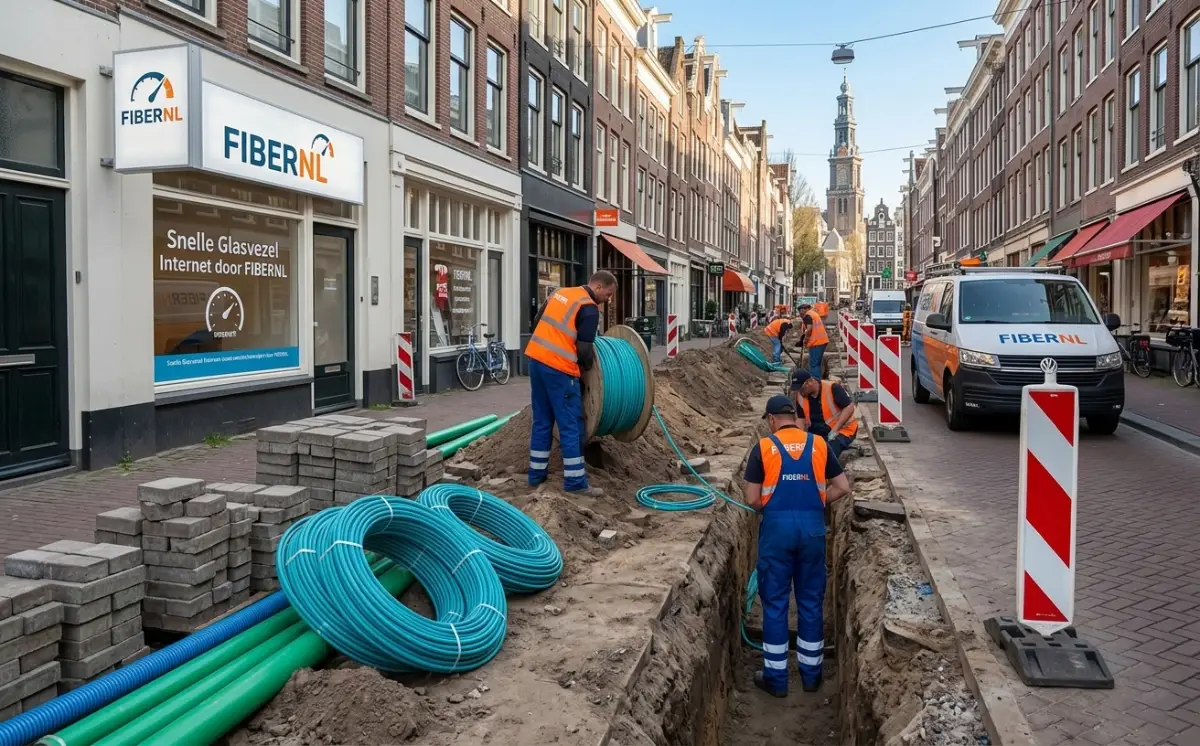
There is a quiet revolution happening beneath the streets of the Netherlands, and FiberNL is one of the companies driving it. While most conversations about Dutch internet infrastructure naturally gravitate toward household names like KPN or Vodafone Ziggo, Fiber Nederland — widely known as FiberNL — has been carving out a distinct and increasingly influential position in one of Europe’s most competitive broadband markets. Built on a foundation of fiber-optic technology, transparent pricing, and a genuine commitment to serving communities that larger providers often overlook, FiberNL represents something refreshingly different: an independent operator that treats internet connectivity less like a commodity and more like a public responsibility.
What Is FiberNL and How Did It Get Here?
Fiber Nederland, operating under its well-recognized brand identity at fiber.nl, is an Amsterdam-headquartered independent fiber-to-the-home (FTTH) operator serving both residential and business customers across the Netherlands. Headquartered at its Amsterdam base with operational centers in Almere, the company functions as a private limited liability company — a B.V. (Besloten Vennootschap) under Dutch law — and complies fully with regulations set by the ACM (Autoriteit Consument & Markt), the Dutch Authority for Consumers and Markets.
What separates FiberNL from its competitors from the outset is its deliberate independence. Rather than owning a single proprietary network, the company has positioned itself as an operator capable of running on multiple fiber-to-the-home networks simultaneously. This makes it what insiders call a “first mover” — willing to launch services on newly built FTTH networks before most other providers take the commercial risk of doing so. The strategy is shrewd. By being available across several open-access infrastructure networks, FiberNL avoids the monopoly trap that has historically constrained smaller Dutch telecoms, giving it both geographic flexibility and a competitive cost structure.
The company’s growth story includes a pivotal chapter from 2016, when it acquired Stipte — formerly known as Scarlet Netherlands — a move that meaningfully expanded its subscriber base and network reach almost overnight. At various points in its history, FiberNL also explored ambitious consolidation opportunities, including an attempted acquisition of Vodafone Thuis and Online, which would have elevated the company to the position of third-largest telecom provider in the Netherlands. While that particular ambition didn’t materialize, it revealed the scope of FiberNL’s commercial thinking. The company was ultimately acquired by M7, a subsidiary of the French media conglomerate Vivendi, bringing institutional backing to what had already become one of the fastest-growing independent internet providers in the country.
Will You Check This Article: Pagliaesque: The Bold, Provocative Style That Changed Cultural Criticism
The Technology Behind the Brand: Fiber-to-the-Home Explained
To understand what makes FiberNL’s offering genuinely compelling, it helps to understand what fiber-optic internet actually delivers versus the older alternatives still running under many Dutch streets.
Traditional copper-based DSL and older coaxial cable connections transfer data via electrical signals. Their performance degrades over distance, making speeds inconsistent and putting a practical ceiling on how fast they can ever get — no matter how much you upgrade the electronics at each end. Fiber-optic cable works on an entirely different physical principle: it transmits data as pulses of light through thin glass strands, which means it suffers almost no signal loss over distance and can theoretically carry enormous amounts of data with total consistency. The laws of physics are, in this case, genuinely on the consumer’s side.
FiberNL’s network infrastructure is built squarely on this technology. The company delivers symmetric fiber connections — meaning upload and download speeds are equal — at packages reaching up to 10 Gbps (10,000 Mbps). That figure puts it among the fastest residential internet offerings in the Netherlands. For context, a symmetrical 1 Gbps connection (already far beyond what most households actually need today) allows a family to simultaneously stream multiple 4K video streams, run smart home systems, conduct video conferences in high definition, and still have substantial bandwidth headroom left over. At 10 Gbps, you are essentially future-proofing for technology that doesn’t widely exist yet for consumers.
Why Symmetrical Speeds Actually Matter
For years, internet providers built their networks with a fundamental assumption baked in: people download far more than they upload. That was true when the internet mostly meant consuming content — browsing, watching, reading. It is becoming less true with every passing year.
Remote working has transformed upload demands dramatically. Video calls, large file transfers to cloud storage, sending high-resolution images, managing servers, uploading content to platforms — all of these require meaningful upload bandwidth. Fiber’s symmetrical design is particularly well-suited to 2025’s internet habits in a way that cable networks, which are architecturally biased toward download, simply aren’t. For small businesses and freelancers working from Dutch homes, this practical reality makes fiber-to-the-home not just a luxury upgrade but an operational necessity.
FiberNL’s Service Portfolio: More Than Just Internet
One of the company’s distinguishing commercial choices has been to offer what the industry calls triple-play services — internet, digital television, and telephony packaged together — rather than forcing customers to piece together services from different providers.
The television offering is delivered in partnership with CANAL+ and includes access to over 80 live channels alongside on-demand film libraries and streaming content accessible across multiple devices. This is not a stripped-back catch-up service; it is a full interactive television platform designed to compete with what the major operators offer. The flexibility aspect is particularly notable: FiberNL has consistently promoted a “pay for what you use” philosophy, where customers can activate or deactivate specific TV channels and features through self-service tools rather than being locked into fixed bundles where half the content never gets watched.
The telephony component rounds out the bundle with reliable landline services at pricing designed to undercut the traditional providers who have historically charged premium rates for voice calls. For households that still want a fixed-line telephone alongside their broadband, FiberNL’s bundled approach keeps the overall cost manageable without the need to juggle separate bills and providers.
Taken together, this triple-play model gives FiberNL a meaningful advantage over providers that only offer internet, because it allows the company to capture a larger share of a customer’s total monthly communications spend while delivering a more convenient, integrated experience.
The Dutch Fiber Market: Where FiberNL Fits In
The Netherlands has become one of Europe’s most fiber-advanced nations, and understanding this landscape helps clarify exactly where FiberNL sits within it. According to recent market data, by early 2025 between 7 and 8 million Dutch households — out of approximately 9.3 million total — had access to a fiber optic network, representing fiber availability coverage of roughly 75 to 85 percent of the country. Annual deployment rates have been running at around 1.2 million homes passed per year, with the stated ambition of reaching near-total fiber coverage by 2026.
The market has historically been dominated by two giants: KPN, the incumbent national telecommunications operator, which controls the largest share of the fixed broadband market, and VodafoneZiggo, whose cable network passes approximately 90 percent of Dutch homes. Together, these two players have long controlled the overwhelming majority of broadband subscriptions. Smaller, independent operators like FiberNL have had to find creative strategies to establish themselves in this environment, and the emergence of open-access fiber networks has been their greatest structural ally.
Open-access infrastructure — networks built by one company but made available at wholesale rates to any service provider that wants to use them — has fundamentally changed the competitive dynamics. Open Dutch Fiber, backed by investment firm KKR and now connected to over 1.5 million households as of early 2026, exemplifies this model. FiberNL has been positioned to capitalize on exactly these kinds of open networks, operating as a retail services provider on top of wholesale fiber infrastructure without needing to spend billions laying its own cables.
Competition and Differentiation
The independent ISP space in the Netherlands also includes names like Delta Fiber, Odido (the rebranded T-Mobile Netherlands), Budget Thuis, and Youfone — each targeting slightly different segments of the market. FiberNL’s differentiation strategy has consistently rested on three pillars: innovation in pricing and packaging, speed of entry onto newly available fiber networks, and a brand identity that communicates transparency and fairness rather than corporate bureaucracy.
The company’s marketing positioning, which has included significant above-the-line advertising — reportedly generating over €14 million in media value across outdoor, radio, television, print, and online campaigns at the height of its independent growth phase — built genuine brand recognition in a market where smaller ISPs can easily get lost in the noise.
Pricing Philosophy: Transparent by Design
One aspect of FiberNL’s approach that has earned it particular loyalty among its customer base is its pricing philosophy. In a market where many providers have historically relied on complex introductory offers, hidden fees, automatic price rises after the first contract year, and bundled products that customers didn’t want, FiberNL built its brand around the opposite approach.
Fixed pricing, flexible and modular product structures, and a “try and buy” model that allows customers to test services before fully committing have all been part of the company’s commercial DNA. The guaranteed internet speeds policy — promising that the speeds advertised are the speeds customers actually receive, not theoretical maximums that require ideal conditions — reflects a maturity in customer relationships that regulators and consumer advocates across Europe have been pushing the industry toward for years.
For practical context, the Dutch fiber internet market in 2025 features entry-level packages starting at roughly €35 per month for 100 Mbps connections, with mainstream gigabit plans clustering in the €40 to €60 range and premium multi-gigabit offerings pushing above €80 per month. FiberNL has consistently aimed to sit at the competitive end of this pricing spectrum without sacrificing service quality, which is a genuinely difficult balance to maintain over time.
Serving Underserved Communities: A Strategic and Ethical Priority
Perhaps the most interesting dimension of FiberNL’s identity is its stated and demonstrated focus on extending connectivity to areas that larger providers typically deprioritize. The commercial logic of big telecoms is straightforward: dense urban areas deliver more revenue per kilometer of cable laid, so rural towns and aging suburban districts tend to wait longest for infrastructure upgrades.
FiberNL has positioned itself as an operator willing to move into these underserved zones — not purely as a charity exercise, but because being the first provider to build customer relationships in a new area creates long-term competitive advantages that are very difficult to displace. In the words of the company’s own ethos, connectivity is not a luxury; it is a condition of participation in modern economic and social life. That framing resonates strongly with Dutch policymakers and municipal governments who have been under pressure to ensure digital equity across the country.
The practical work of entering a new municipality involves genuine collaboration with local authorities. Civil works are disruptive — trenching streets for fiber ducts affects traffic, businesses, and residents — and regulators need to approve the work. FiberNL’s approach of engaging with municipalities early in the planning process, treating fiber as the long-lived infrastructure it is rather than just another construction project, has helped it earn approvals and community goodwill in areas where other operators have struggled.
Smart Homes, IoT, and the Infrastructure of Tomorrow
The timing of FiberNL’s expansion into the Dutch market aligns with a broader technological shift that is only accelerating. Smart home devices — thermostats, security cameras, voice assistants, automated lighting, connected appliances, energy management systems — all place continuous demands on a home’s internet connection. A typical Dutch household in 2025 might have between 20 and 40 connected devices, and that number is climbing steadily as the Internet of Things becomes embedded in everyday life.
Each of these devices doesn’t necessarily consume enormous bandwidth individually, but their cumulative demand, combined with simultaneous streaming, remote work video calls, and cloud-based file synchronization, creates a use pattern that genuinely benefits from fiber’s combination of speed, low latency, and reliability. Cable networks can struggle with congestion during peak hours because neighborhood nodes are shared between many subscribers; fiber-to-the-home connections are dedicated lines, meaning that what a customer pays for is what they get regardless of what their neighbors are doing online.
This technical reality is increasingly well understood by Dutch consumers, and it explains why fiber subscription take-up reached approximately 3.2 million active lines by the end of 2024 — a figure that continues to climb as legacy DSL users switch and even cable subscribers weigh the benefits of moving.
The Regulatory Environment: Rules That Shape the Market
Operating in the Dutch telecom sector means navigating a regulatory framework that is among the more consumer-protective in Europe. The Netherlands implemented net neutrality legislation in 2012 — earlier than most EU member states — prohibiting internet providers from blocking or throttling specific types of traffic or services, and banning zero-rating practices that would create artificial advantages for certain content platforms.
The ACM actively monitors the market and holds providers accountable to their advertised speeds and service terms, which has raised the baseline quality standards across the industry. For an operator like FiberNL that has built its brand on transparency and guaranteed performance, this regulatory environment actually plays to its strengths rather than constraining it. Providers that relied on misleading marketing face more exposure in a market with active regulatory oversight.
The European Commission’s broader Digital Decade targets, which aim for all EU households to have access to gigabit-speed connectivity by 2030, create additional policy momentum behind the kind of infrastructure expansion that FiberNL has been pursuing. Government subsidies and co-investment frameworks for rural connectivity further support the commercial case for building in areas that might otherwise struggle to attract private capital.
Customer Experience and Community Trust
Any telecommunications provider can make promises about speed and price. What differentiates the operators that build lasting customer relationships is execution: does the service actually work as described, and when problems arise, are they resolved quickly and fairly?
FiberNL has cultivated its customer service presence across platforms including Trustpilot and social media channels, using direct engagement rather than the automated deflection that larger telecoms often deploy. Short lines of communication — a phrase the company itself uses to describe its internal culture — mean that issues escalate and resolve faster than at operators whose customer service is routed through multiple bureaucratic layers.
This responsiveness matters more in the ISP category than in almost any other consumer service, because internet outages directly disrupt people’s ability to work, communicate, and access essential services. A provider that resolves problems quickly, communicates honestly about what went wrong, and makes customers feel heard earns a loyalty that aggressive pricing alone cannot buy.
What the Future Looks Like for FiberNL
The Dutch fiber market is still in an active growth phase. With annual deployment running at over a million homes passed per year and the national coverage target approaching, the competitive pressure is only going to intensify as networks mature. For FiberNL, the strategic challenge is familiar to any fast-growing independent: how to scale customer acquisition and service quality simultaneously while managing infrastructure costs that are, by the nature of fiber deployment, substantial.
The company’s M7/Vivendi acquisition brings resources and institutional depth that purely bootstrapped growth could never have sustained. At the same time, maintaining the independent, customer-first identity that built the brand in the first place requires deliberate cultural commitment as the organization scales.
Emerging technological trends are broadly favorable. Demand for high-bandwidth connectivity is a structural one-way ratchet: it goes up, never down. AI-assisted applications, immersive media formats like spatial video, cloud gaming, telemedicine, and remote education all require the kind of low-latency, high-throughput connections that fiber delivers best. As these use cases move from novelty to necessity, the value proposition of a genuine fiber-to-the-home connection becomes easier for customers to understand intuitively.
For the underserved municipalities that FiberNL has prioritized, the stakes are particularly high. Communities without reliable high-speed internet face real economic disadvantages — businesses cannot recruit remotely, students struggle to access digital learning resources, and residents find themselves cut off from services that the rest of the country takes for granted. Every household that FiberNL connects in these areas represents not just a customer relationship but a genuine improvement in that community’s participation in the digital economy.
FiberNL: An Independent Voice in a Market That Needs One
The Dutch telecom market, for all its maturity and competitiveness, benefits meaningfully from having independent operators like FiberNL in the mix. When two players control 80 to 90 percent of a market, the pricing, innovation, and customer service standards of the entire sector tend to track the preferences of those dominant players rather than the needs of customers. Independent challengers — especially those with genuine infrastructure capability and a clearly differentiated brand — force the incumbents to be more responsive, more transparent, and more willing to invest in quality improvements they might otherwise delay.
FiberNL’s history — from its origins as a disruptive independent FTTH operator, through acquisitions and strategic growth, to its position today as a credible alternative in one of Europe’s most digitally advanced countries — is a case study in how competition works when the conditions are right. Open-access fiber infrastructure gave smaller operators a level playing field they had never previously enjoyed in the Dutch market, and companies like FiberNL were ready to run with the opportunity.
Conclusion
FiberNL has earned its place in the Dutch internet landscape through a combination of technology leadership, pricing transparency, and a genuine commitment to reaching customers that the dominant players have historically underserved. Whether you are a household seeking a reliable, future-proof alternative to legacy cable or DSL, a small business in need of symmetrical gigabit connectivity, or a community in a rural area waiting for the internet infrastructure that urban centers have long taken for granted, Fiber Nederland represents a compelling and credible option.
The broader story, though, extends beyond any single company. FiberNL’s trajectory illustrates what becomes possible when modern open-access fiber infrastructure meets a genuinely independent operator willing to challenge established market dynamics. In the Netherlands — and, increasingly, across Europe — the invisible highways of glass that companies like FiberNL are helping to build will determine economic opportunity, social participation, and quality of life for decades to come. That is not an overstatement. It is simply what connectivity has become.
Read More: Dollartimes.co.uk
The way we think about living spaces has shifted dramatically in the past decade. Studio apartments are getting smaller, remote work has made multi-purpose rooms a necessity, and a growing wave of minimalism has people rethinking every square foot they occupy. Into this environment stepped dulcfold.com — a platform that began circulating online in late 2025, positioning itself as a destination for smart, foldable, and space-saving products built for modern life. For anyone navigating the crowded world of compact living solutions, the promise sounds genuinely appealing. But what is dulcfold.com actually offering, how does it hold up under scrutiny, and — perhaps most practically — what does it reveal about the real, thriving market for foldable lifestyle products that it claims to serve?
What Dulcfold.com Claims to Be
According to its own “About Us” page, dulcfold.com describes itself as a lifestyle platform dedicated to smart, foldable, and space-saving solutions for everyday living. The brand philosophy leans heavily into purposeful minimalism — the idea that thoughtfully designed products can help people live better with less. Its stated mission covers everything from offering practical foldable furniture and collapsible storage solutions, to promoting sustainable consumption through multi-use, durable items.
On paper, this is a compelling identity. The platform presents several product categories: foldable furniture such as tables, chairs, and desks; collapsible storage bins and organizers; portable travel accessories including foldable bags and compact toiletry cases; and compact kitchen tools aimed at reducing counter clutter. The aesthetic messaging throughout emphasizes clean lines, neutral colors, and a minimalist sensibility that aligns well with what urban dwellers in 2025 are genuinely looking for.
All of this speaks directly to real pain points that millions of people experience. The messaging is current, the aesthetic is on-trend, and the product categories it claims to address are genuinely in high demand. That makes it worth examining both what it offers conceptually and how it stacks up when looked at more critically.
Will You Check This Article: Mynewsdaily.co.uk
The Trust Question: What Independent Analysis Reveals
Here is where the story becomes more nuanced. While the brand narrative of dulcfold.com is polished and resonant, independent analysis of the domain raises legitimate concerns that any thoughtful consumer should be aware of.
Multiple cybersecurity and website reputation tools have assessed the domain and returned cautionary signals. According to one detailed review published in early 2026, dulcfold.com received a very low trust index — approximately 4.7 out of 100 — from automated reputation evaluators. Separate assessments flagged the domain for indicators including limited public ownership information, a sparse metadata profile, and structural proximity to other low-trust domains on the web. These are not automatic proof of malicious intent, but they are the kinds of signals that experienced online shoppers and security-conscious users treat seriously.
The domain is also relatively new, which compounds these concerns. New domains are not inherently dangerous, but when a new domain combines youth with a lack of verifiable ownership, no independently confirmed reviews on platforms like Trustpilot or the Better Business Bureau, and a generic template-style layout, the collective picture warrants caution. A legitimate brand, even a small one, typically anchors itself with a clear founding story, verifiable contact information, and some trace of an external reputation beyond its own marketing copy. As of early 2026, dulcfold.com had not clearly established any of these.
What this means practically: if you are considering purchasing products through dulcfold.com directly, the responsible approach is to proceed with caution, avoid sharing sensitive financial data until the platform has a more established public track record, and consider whether comparable products are available through verified retailers with dispute resolution protections in place.
This is not to say the concept behind dulcfold.com is without merit. Quite the opposite. The ideas it is built around — foldable furniture, compact organization, minimalist living — are genuinely valuable and represent a booming market. The platform, at minimum, is pointing at real solutions to real problems, even if questions remain about whether it is currently the most reliable place to find those solutions.
Why the Foldable Living Movement Is Genuinely Significant
To understand why a platform like dulcfold.com can generate so much search interest so quickly, it helps to understand the scale of the shift happening in how people relate to their living spaces.
These are not niche figures. They reflect a fundamental change in urban demographics, housing costs, and lifestyle priorities.
Urbanization is the primary driver. A studio apartment in Karachi, London, New York, or Singapore may have a single room that needs to function as a bedroom, home office, living room, and occasional guest space — all in the same day. Furniture that adapts to those shifting demands is not a luxury; it is a practical necessity.
The shift to hybrid and remote work has accelerated this dynamic further. When millions of people began working from home in 2020, many discovered they had no dedicated office space. A wall-mounted folding desk that disappears when the workday ends — rather than occupying a corner of a small bedroom permanently — became enormously appealing. That demand has not reversed as hybrid arrangements became normalized; if anything, it has deepened, because people are now designing their homes with the explicit understanding that spaces need to flex.
There is also a cultural component. Minimalism, which gained serious mainstream traction in the mid-2010s through figures like Marie Kondo and the broader decluttering movement, has evolved from an aesthetic preference into something closer to a philosophy of intentional living. Younger consumers especially are drawn to the idea of owning fewer, better things — items that serve multiple purposes, take up less space, and can be stored or transported with minimal friction. Foldable and collapsible products align perfectly with this value system.
What Good Foldable Products Actually Look Like
If you are drawn to the concept that dulcfold.com represents — smart, adaptable products for compact living — it is worth understanding what genuinely high-quality solutions in this category look and feel like, so you can evaluate any source critically.
Furniture That Earns Its Place
The best foldable furniture passes a straightforward test: it has to work as well folded as it does unfolded, and the folding mechanism itself cannot become a liability. One of the most common failure points in low-quality folding furniture is the hinge. Cheap particle board combined with weak metal hinges will typically fail within a month or two of regular use under real stress. Anyone who has had a folding chair collapse mid-dinner or a desk wobble under the weight of a laptop knows the frustration of this.
Truly well-designed folding tables and chairs use reinforced joints, quality locking mechanisms, and materials — often aluminum, solid hardwood, or high-grade engineered composites — that can handle the mechanical stress of repeated folding. The best designs, as seen from established European and Scandinavian furniture makers, make the folding action almost invisible. A table that looks like a beautiful wooden console but extends into a full dining surface, or a wall-mounted panel that folds down to reveal an ironing board, achieves the ideal: the function disappears until you need it.
Modular seating that converts into a guest bed, nesting stools that stack into a sculptural form, and shelving systems that collapse flat when not in use all represent this category at its best. The engineering behind them is genuinely sophisticated, which is also why quality examples tend to carry a higher price point than mass-market knockoffs. If an unfamiliar platform is advertising transforming furniture at steep discounts, that price gap almost always reflects a compromise in material quality or mechanical durability.
Storage Solutions Worth Having
Collapsible storage is one of the most accessible entry points into the space-saving lifestyle. Canvas and silicone bins that fold flat when empty are available from a wide range of established brands, and they represent an excellent value proposition: they provide full storage capacity when needed and take up almost no space when not. Vacuum storage bags — particularly for seasonal items like heavy winter bedding — can compress bulky items to a fraction of their original volume.
Wall-mounted solutions deserve more attention than they typically receive. Vertical space in most rooms is dramatically underused. Floating shelves, mounted bike hooks, over-door organizers, and wall-mounted pegboards can transform wasted wall area into functional storage without consuming any floor space at all. In a small apartment, this distinction matters enormously.
Travel and Portable Accessories
The travel accessories segment is perhaps where foldable design has reached its most refined state. Lightweight packable backpacks that compress to the size of a fist, collapsible water bottles made from food-grade silicone, packing cubes that compress contents with a zip, and travel toiletry organizers that hang from a hook — these products are widely available from verified retailers, carry manufacturer guarantees, and have the advantage of years of real-world user reviews to guide purchasing decisions.
The Minimalist Lifestyle Connection
Any serious look at the foldable living trend has to acknowledge its relationship with minimalism as a broader lifestyle orientation. The two are deeply intertwined, and understanding that connection helps explain why platforms like dulcfold.com generate organic search interest.
Minimalism, in its most practical form, is not about aesthetic spareness or deprivation. It is about intentionality: choosing products and environments that genuinely support how you want to live, rather than accumulating things that create obligations and noise. In a physical space, this often translates to a preference for multi-functional items over single-purpose ones, for quality over quantity, and for systems that reduce friction in daily life rather than add to it.
Foldable and collapsible products are a natural fit for this orientation because they are, at their core, about adaptability. A product that can fold away is a product that is not occupying space it does not need to occupy. A chair that becomes a storage unit when not in use is a product that earns its place twice. This efficiency — material, spatial, cognitive — resonates deeply with people who are actively trying to simplify their environments.
There is also a sustainability argument that holds genuine weight. Products designed for durability, multi-use functionality, and long lifespans generate less waste than disposable alternatives. When the foldable desk you buy lasts a decade, it represents a better environmental outcome than cycling through three cheap particle-board alternatives over the same period. Brands that position themselves in this space, including dulcfold.com in its stated philosophy, are tapping into a consumer value set that is not going away.
Practical Guidance for Building a Smarter Living Space
Whether or not dulcfold.com ultimately proves itself as a trusted retailer, the principles it is built around translate into genuinely actionable advice for anyone working with limited space.
Start with an honest audit of how each room in your home is actually used versus how you wish it were used. Most people, when they do this exercise, discover that certain areas serve a single function at peak times and sit idle the rest of the day. A dining table used only for meals three times a day is occupying floor space for twenty-one hours doing nothing. A foldable or extending alternative could reclaim that space for work, exercise, or simply open floor area that makes a room feel less cluttered.
Invest in quality for the pieces that bear the most mechanical stress. Folding desks, convertible sofas, and dining chairs that see daily use should be purchased with durability as the primary criterion. Read construction specifications carefully, look for reinforced joint details, and prioritize brands with verifiable return policies and customer support.
Think vertically and systematically. The best space-saving transformations often come not from replacing furniture but from adding smart storage systems to existing walls. A well-planned wall-mounted shelving system can accommodate the equivalent of a large bookcase while freeing up the floor entirely.
For travel specifically, the compact living principle pays some of its highest dividends. A fully curated set of foldable and compressible travel accessories — packable jacket, compression cubes, collapsible bottles, hanging organizer — can reduce luggage from a checked bag to a carry-on without sacrificing comfort or convenience. The freedom this creates, particularly for frequent travelers dealing with airline baggage fees, is both practical and immediate.
The Broader Digital Context: Understanding Domain Caution
It is worth spending a moment on a topic that is increasingly relevant for online consumers: how to evaluate an unfamiliar digital brand in a landscape where new sites appear and disappear constantly.
The story of dulcfold.com is instructive because it illustrates a pattern that is genuinely common. A domain emerges, positions itself around a trend that has real consumer demand, presents polished-enough messaging, and generates curiosity — but lacks the independent verification signals that distinguish established brands from fly-by-night operations. This is not unique to dulcfold.com; it describes hundreds of domains that appear around trending lifestyle categories every year.
The practical heuristics for protecting yourself are relatively simple. Look for independent reviews on established platforms rather than relying only on what a site says about itself. Check whether the brand has a traceable history — a founding story with verifiable details, social media presence with genuine engagement, or press coverage in recognizable outlets. Be especially cautious about entering payment information on a domain that cannot point to these external signals. Reputable payment gateways and buyer protection programs add a layer of recourse, but they are not a substitute for platform-level trust.
None of this means you should dismiss every unfamiliar brand. New legitimate businesses emerge all the time, and many excellent small retailers operate without the scale to generate massive independent review profiles. The key distinction is whether the lack of external verification is accompanied by other low-trust signals — new domain age, no visible ownership, sparse metadata, low trust scores on cybersecurity tools — because the combination of these factors, rather than any single one, is what elevates concern.
Where the Market Is Heading
The foldable and compact living market is not a passing trend. Urban populations will continue to grow, housing costs show no sign of structural reversal in major cities, and the value placed on adaptable, multi-functional design is deepening across every age group and income bracket.
What is emerging at the cutting edge of this market is a convergence between smart home technology and compact living design. Motorized murphy beds that fold out of a wall at a voice command, smart storage systems that track what they contain, modular furniture that reconfigures via an app — these represent where premium design is heading. For the mass market, the innovation tends to be more accessible: cleverer folding mechanisms, more durable materials at accessible price points, and designs that treat aesthetics as a non-negotiable rather than an afterthought.
Sustainability is also becoming a competitive differentiator in this space rather than merely a talking point. Brands that can genuinely demonstrate product longevity, responsible material sourcing, and reduced packaging waste are increasingly preferred by consumers who have grown skeptical of green-washing. The platforms that will earn durable trust in the compact living niche are those that back their sustainability claims with specifics: material certifications, warranty commitments, and repair programs that extend product life.
Conclusion
Dulcfold.com has entered a conversation that genuinely matters to a lot of people. The ideas it clusters around — foldable furniture, compact storage, minimalist living, smart design for small spaces — are real, valuable, and backed by a market that is growing steadily year over year. If you are someone trying to make the most of a studio apartment, outfit a home office that disappears when work ends, or simply live with fewer, better things, these concepts are worth your time and attention.
At the same time, the platform itself comes with enough unanswered questions about its verifiability and trust profile that caution is the right posture for anyone considering direct transactions through it. The responsible approach is to follow the ideas wherever they lead — toward established retailers, verified brands, and thoughtfully curated products with genuine consumer track records — rather than to take the marketing narrative at face value simply because it is appealing.
The good news is that the market for smart, foldable, space-saving living products is rich with legitimate options. The movement itself is thriving, the design innovation is real, and the lifestyle benefits are well worth pursuing. Whether dulcfold.com grows into a trusted part of that ecosystem remains to be seen. In the meantime, the principles it champions are sound — and they are available through sources you can rely on.
Read More: Dollartimes.co.uk

Caricatronchi: The Bold Digital Art Style Redefining Identity

FiberNL: The Independent Fiber Provider Reshaping Dutch Internet

Pagliaesque: The Bold, Provocative Style That Changed Cultural Criticism

Dulcfold.com Reviewed: Smart Foldable Living or Empty Promise?

Senaven: The Art of Turning Your House Into a Serene Haven
Pagliaesque: The Bold, Provocative Style That Changed Cultural Criticism
-
 Tech26 minutes ago
Dulcfold.com Reviewed: Smart Foldable Living or Empty Promise?
-
 Travel20 minutes ago
Senaven: The Art of Turning Your House Into a Serene Haven
-
 Blog15 minutes ago
Pagliaesque: The Bold, Provocative Style That Changed Cultural Criticism
-
 Entertainment6 seconds ago
Caricatronchi: The Bold Digital Art Style Redefining Identity