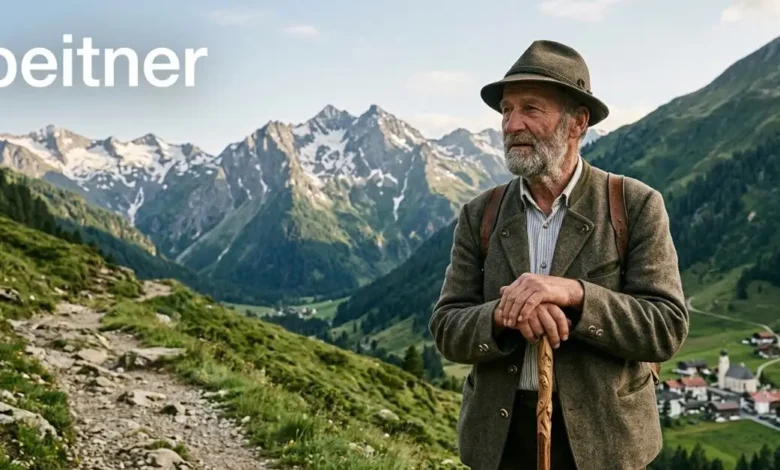
Family names carry more history than most people realize, and few surnames illustrate that as clearly as Peitner, a distinctive name rooted deep in the mountainous heartlands of Central Europe. For anyone who has ever wondered where their family name came from or simply loves uncovering the stories tucked inside genealogy, this name offers a genuinely fascinating case study in how geography and identity became permanently intertwined centuries ago. Tracing back to the Alpine regions of Austria, Bavaria, and South Tyrol, the name reflects a naming tradition that turned physical landscape into lasting family identity. This article explores where the surname comes from, what it means, and why it continues to hold cultural relevance for descendants today.
The Origins of the Peitner Surname
Surnames as a formal concept emerged out of practical necessity, as growing European populations during the medieval period needed a reliable way to distinguish between individuals who shared the same first name within increasingly crowded communities. Most surnames from this era fell into a handful of recognizable categories, including those based on occupation, patronymic lineage, personal description, or topography, meaning the physical landscape surrounding where a family lived. This particular surname falls squarely into the topographic category, tying its meaning directly to the mountainous terrain that shaped daily life across the regions where it first took root.
Linguistic scholars trace the name back to Middle High German, where the root word “līte” referred to a mountain slope or spur, with the suffix “er” simply denoting an inhabitant of that particular feature. Combined, the name essentially describes someone who lived on or near a steep mountain slope, a fitting description given that its historical stronghold sits within the rugged Alpine terrain of Austria and Bavaria. This kind of geography-based naming was extremely common throughout medieval Central Europe, where the physical landscape played such a dominant role in daily life that it naturally became woven into how families identified themselves for generations to come.
Will You Check This Article: Jernsenger Buying Guide: Styles, Uses, Benefits
Regional Roots in the Alpine Heartlands
The historic heartland most closely associated with this surname sits within the highlands of Upper Bavaria, where parish records from the sixteenth and seventeenth centuries frequently document families bearing the name living in small alpine communities as farmers, landowners, and skilled craftsmen. These early records provide genealogists with a valuable window into how the family name spread and settled across specific valleys and villages long before modern record-keeping standardized the way such history gets preserved. The consistency of the name appearing across these historical documents suggests a stable, rooted presence within these communities rather than a name that arrived through later migration.
Another significant center of the surname’s history lies within the Pustertal, a strikingly beautiful alpine valley that was once part of the Austro-Hungarian Empire before later political shifts divided the region between modern Tyrol and South Tyrol. This valley’s dramatic landscape, characterized by steep slopes and narrow mountain passes, reinforces just how directly the surname’s meaning connected to the physical environment its earliest bearers actually inhabited. Families settled throughout this region often maintained close ties to farming and land stewardship, professions that kept them intimately connected to the very mountain terrain their name described for centuries afterward.
Alternative Interpretations and Occupational Ties
While the topographic explanation remains the most widely supported interpretation among genealogists and linguists, some historical research points toward an alternative occupational origin connected to metalworking or soldering trades practiced within certain communities bearing the name. In this interpretation, an early bearer of the name may have worked as a pewtersmith or metalworker, linking the family identity not to landscape but to a skilled trade that would have held genuine importance within a medieval European community. Occupational surnames were nearly as common as topographic ones during this period, since a family’s trade often defined their social role just as strongly as where they physically lived.
This dual possible origin illustrates something genealogists frequently encounter: surnames rarely have a single, universally agreed-upon explanation, particularly when a name has existed long enough to develop across multiple regions or communities independently. Depending on a specific family’s documented lineage and the historical records available, either interpretation, geographic or occupational, may apply more accurately to their particular branch of ancestry. This complexity is part of what makes genealogical research into names like this one so genuinely rewarding, since uncovering which explanation fits a specific family often requires digging through regional archives rather than relying on a single generalized definition.
Cultural Significance Across Generations
Beyond its literal etymological meaning, the surname carries a broader cultural weight tied to Alpine heritage, rural craftsmanship, and a deep historical connection to the land itself. For descendants exploring their family history today, discovering this kind of geography-rooted meaning often provides a tangible link to a specific place and way of life, rather than an abstract or generic family name detached from any particular history. That sense of place-based identity remains one of the more compelling reasons people continue researching surname origins even generations after their ancestors emigrated far from the original Alpine communities where the name first developed.
The relative rarity of the name compared to more common European surnames adds to its distinctiveness, making it a name that carries genuine weight and specificity rather than blending anonymously into a sea of similarly common family names. This uncommon quality has helped preserve a stronger sense of shared identity among modern descendants, many of whom take particular interest in tracing their lineage back to the specific alpine villages and valleys where parish records first documented their family. Genealogy enthusiasts researching this name often find that its distinctiveness makes historical records somewhat easier to trace compared to more widespread, generic surnames scattered across countless unrelated family lines.
The Modern Village and Regional Legacy
Interestingly, the name is not only associated with a family surname but also connects to an actual place nestled within the Tyrol region of Austria, an area celebrated for its dramatic alpine scenery, rolling hills, and rich cultural traditions. Visitors to this part of Austria encounter a landscape defined by towering peaks, lush valleys, and hiking trails that wind through terrain reflecting exactly the kind of mountainous environment the surname’s etymology describes. This overlap between family name and physical place underscores just how deeply intertwined identity and geography became throughout this region’s long history.
Local traditions in this Tyrolean region remain vibrant even today, with festivals featuring traditional dress, folk music, and communal celebrations that reflect centuries of cultural continuity in these alpine communities. Locals proudly maintain customs passed down through generations, from traditional clothing worn during celebrations to folk dances performed at community gatherings throughout the year. For anyone tracing family history back to this area, experiencing these living traditions firsthand offers a far richer understanding of ancestral heritage than historical records alone could ever fully convey, connecting modern descendants to the same landscape and culture their ancestors once called home.
Notable Presence in Modern Fields
Descendants carrying this surname have gone on to make contributions across a range of modern fields, including art, academia, sports, and technology, demonstrating how a name rooted in medieval Alpine geography has continued evolving alongside the families who carry it into entirely new professional territories. This kind of generational evolution, from farming and craftsmanship in isolated mountain villages to diverse modern careers across the globe, reflects a broader pattern seen across countless European surnames as descendants emigrated and adapted to changing economic and social landscapes over the centuries.
Genealogical interest in the name has also grown steadily among people researching their own family trees, particularly as digitized parish records and international genealogy databases have made it significantly easier to trace ancestry back to specific alpine communities than was possible even a generation ago. This growing accessibility has sparked renewed curiosity among descendants scattered across different countries, many of whom had little previous knowledge of their family’s specific regional origins before beginning their research. That renewed interest speaks to a broader cultural trend toward genealogy and ancestral discovery, where names like this one serve as meaningful entry points into deeper historical and geographic exploration.
Conclusion
The Peitner surname offers a genuinely compelling window into how medieval Europeans transformed physical landscape into lasting family identity, tying generations of descendants to the alpine slopes and valleys of Austria, Bavaria, and South Tyrol. Whether tracing back to its most widely supported topographic meaning describing a mountain slope dweller, or exploring the alternative occupational connections some records suggest, the name carries a rich, layered history worth uncovering for anyone curious about their heritage. Its relative rarity, strong regional roots, and living cultural traditions in the Tyrolean landscape give it a distinctiveness that continues to resonate with descendants researching their family history today. For genealogy enthusiasts and casual researchers alike, exploring this name serves as a reminder that surnames are rarely just labels, but rather small, enduring time capsules connecting us directly to the people and places that came before.
Read More: Buzzbio.co.uk